

 Uncategorized
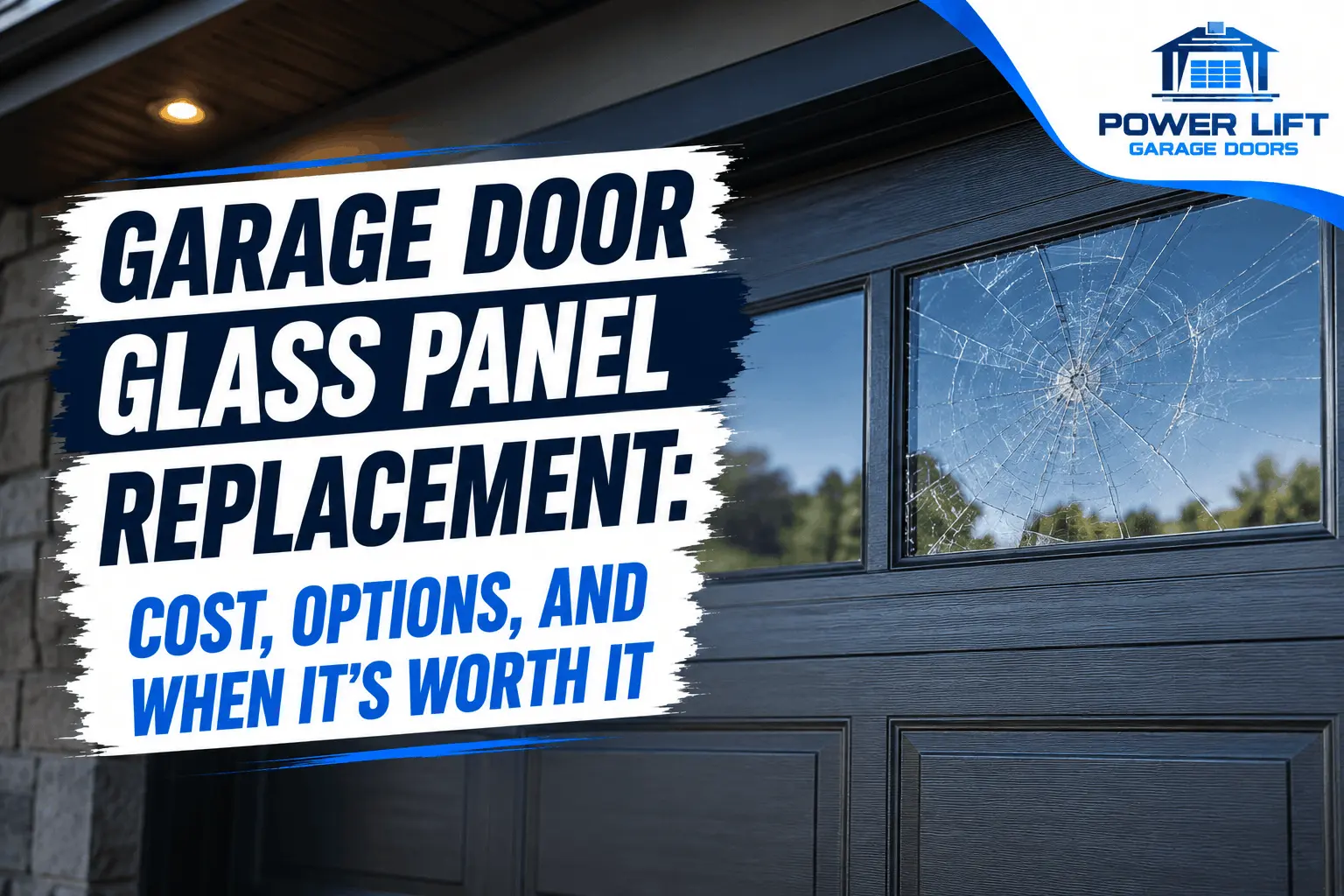
A cracked, foggy, or missing glass panel is one of those garage door problems that’s easy to ignore until it isn’t. It doesn’t usually stop the door from opening or closing, so it sits on the to-do list far longer than a broken spring or a snapped cable would. But a damaged glass insert affects more than looks. It can let in drafts, water, and even a way into your garage for anyone determined enough to reach through a broken pane.
This guide covers everything worth knowing about garage door glass panel replacement: what it typically costs, the material options available, and how to tell whether you’re looking at a quick fix or a good excuse to upgrade the whole look of your door.
What Is a Garage Door Glass Panel, Exactly?
Many sectional garage doors include decorative window inserts, usually set into the top row of panels, to bring in natural light and add visual interest to an otherwise plain steel or wood surface. These inserts aren’t always real glass. Depending on the door’s age and manufacturer, you might find tempered glass, acrylic or plexiglass, frosted or obscure glass for privacy, or even simple plastic inserts styled to look like glass from the street.
Knowing which type your door actually uses matters before you start pricing replacements, since the cost and installation process differ meaningfully between a real tempered-glass insert and a plastic look-alike panel.
Signs You Need Garage Door Glass Panel Replacement
A few clear indicators point to a glass panel problem specifically, rather than an issue with the door panel itself:
Visible cracks or shattered glass, whether from an impact, a lawnmower-thrown rock, or storm debris. Even a small crack tends to spread over time with temperature changes and door vibration.
Fogging or cloudiness between panes, which usually means a seal has failed on an insulated glass insert and moisture has gotten in between the layers. This won’t clear up on its own and is a sign the insert itself needs replacing.
Yellowing or clouding on acrylic panels, a common issue on older plastic inserts that have spent years in direct sun. Once acrylic yellows, it doesn’t return to clear.
Loose or missing decorative grilles, the thin strips that divide a single pane into a multi-pane look. These can come loose from vibration or age and leave the panel looking unfinished even if the glass itself is intact.
Drafts or water intrusion around the frame of the insert, which points to a failed seal around the panel rather than the glass itself, though the fix is often the same: replacing the full insert.
If any of these sound familiar, it’s worth having the panel looked at soon. A small crack or a failed seal rarely improves on its own, and PowerLift’s panel and glass replacement service covers exactly this kind of repair across Pearland and the greater Houston area.
Why Garage Door Glass Panels Fail
Glass and acrylic inserts fail for a mix of predictable reasons. Physical impact is the most obvious: a stray baseball, a wind-blown branch, or a car mirror clipping the door as it passes. Age and UV exposure play a bigger role than most homeowners expect too, especially in a climate like ours. Along the Gulf Coast, intense sun and heat for much of the year accelerate the breakdown of acrylic and plastic inserts specifically, which is part of why an older door’s plastic panels often look worse than the surrounding steel.
Seal failure is another common cause, particularly on insulated or double-pane glass inserts. Over years of temperature swings and door vibration, the seal holding the layers together can weaken, letting in moisture that shows up as permanent fogging. And storm season brings its own risk: wind-driven debris is a leading cause of cracked or shattered panels during high-wind events, which is worth keeping in mind if your area sees regular tropical weather.
Garage Door Glass Panel Replacement Cost
Garage door glass panel replacement typically runs $150 to $600 per panel for a standard insert swap, with the final number depending on a few key factors. A basic single-pane acrylic replacement sits at the lower end of that range, while a real tempered-glass insert, an insulated dual-pane option, or a panel with a custom decorative grille pattern pushes costs toward the higher end.
If the surrounding steel or wood panel itself is also damaged, not just the glass insert, expect the total to reflect a full panel replacement rather than just the glass, which typically costs more since it involves replacing structural material, not just the window portion. Matching an older or discontinued door style can also add cost and lead time, since some manufacturers no longer produce inserts for older door lines and a close match has to be sourced instead.
For a broader look at how this compares to other common repairs, see our full 2026 garage door repair cost breakdown.
Glass and Material Options Worth Knowing About
If you’re replacing a panel anyway, it’s worth understanding the material options rather than defaulting to whatever was originally installed.
Tempered glass is the standard choice for real glass inserts, engineered to break into small, relatively safe pieces rather than sharp shards if it’s ever broken, which matters given how close these panels sit to head height on a garage door.
Acrylic or plexiglass is lighter and less expensive than real glass, and it’s a common original-equipment choice on many production doors. It’s more prone to yellowing and scratching over time than tempered glass, particularly with heavy sun exposure.
Frosted or obscure glass lets light through while blocking a clear view into the garage, a popular option for homeowners who want the aesthetic benefit of windows without giving up privacy or a clear line of sight to whatever’s stored inside.
Insulated dual-pane glass adds a layer of energy efficiency by trapping air (or an inert gas) between two panes, which can help moderate garage temperature swings, worth considering if the garage is attached to living space or used as a workshop.
Decorative grille inserts divide a single pane into a multi-pane look without the cost of installing several small individual panes, a popular way to add curb appeal at a lower cost than a full custom glass configuration.
Repair the Glass, or Replace the Whole Panel?
Not every glass problem requires swapping the entire door panel. In many cases, the glass insert itself can be replaced independently of the surrounding steel or wood frame, which keeps the cost and labor down considerably compared to a full panel swap. This is usually the right call when the damage is limited to the glass itself and the frame and seal around it are still in good shape.
A full panel replacement becomes the better option when the surrounding material is also damaged (a dent, warping, or rust around the frame), when the insert style is being changed entirely (adding windows to a panel that never had them, for example), or when the existing panel is old enough that a matching replacement insert is no longer available and a new panel is the more practical fix.
A technician who inspects the door in person can tell you which category your situation falls into, since it’s often not obvious from a quick look whether the frame around a cracked pane is still structurally sound.
Is Garage Door Glass Panel Replacement Worth It?
For most homeowners, the answer depends on what’s driving the decision. If a panel is already cracked, fogged, or missing, replacement isn’t really optional. It’s a matter of doing it sooner rather than later, since a compromised seal or a cracked pane tends to get worse, not better, over time.
If you’re considering glass panels as an upgrade rather than a repair, the value case is a little different. Windows genuinely do add curb appeal and can make a garage feel less like a sealed box, which matters if the space doubles as a workshop or hangout area. They’re also a reasonable, moderate-cost way to refresh an aging door’s appearance without paying for a full door replacement. The tradeoff is a small reduction in insulation and privacy compared to a solid panel, along with one more component that can eventually need its own repair down the line.
For homes along the Gulf Coast specifically, it’s worth factoring in both UV exposure, which shortens the lifespan of acrylic options in particular, and storm exposure, which makes impact-resistant tempered or laminated glass a more sensible choice than standard glass for anyone concerned about wind-driven debris during hurricane season. If storm resistance is a bigger priority for your home than a cosmetic glass upgrade, it’s worth reading up on hurricane-rated doors more broadly before deciding on glass.
DIY Replacement vs. Hiring a Professional
Replacing a garage door glass insert looks simple enough from the outside: pop out the old panel, set in the new one, done. In practice, a few things make this a job worth handing off, or at least approaching carefully. Broken glass or acrylic has sharp edges and can shatter further while being removed, and getting the new insert properly sealed against the frame matters more than it looks. A poorly sealed panel lets in water and drafts even when the glass itself is fine, which defeats the purpose of the repair.
There’s also a sourcing issue: getting a replacement insert that actually matches your door’s existing panel size, style, and grille pattern usually means going through a supplier that carries parts for your specific door brand, which most homeowners don’t have easy access to on their own. A professional installer typically has that sourcing relationship already in place, which shortens the time between noticing the damage and having it properly fixed.
How Long Does Replacement Typically Take?
For a single insert with an available matching part, replacement is usually a same-visit job, often completed in under an hour once the technician has the correct part on hand. The bigger variable is part availability rather than labor time: a standard tempered-glass or acrylic insert in a common style is often stocked or quickly sourced, while a custom grille pattern or a match for an older, discontinued door line can take longer to track down. If security or weather exposure is a concern in the meantime, such as a shattered panel leaving an open gap, ask about a temporary board-up option while the correct replacement part is sourced.
Getting an Accurate Quote
Because pricing depends heavily on glass type, panel style, and whether the surrounding frame is involved, a written estimate from someone who has actually seen the door is the only reliable way to know your real cost. Bring a clear description (or photos) of the damage and, if possible, the door’s brand and model, since matching an insert to an existing door style is often the main factor in how quickly and affordably it can be replaced.
PowerLift Garage Doors matches new inserts to your door’s existing style whenever a close match is available, across Pearland and the greater Houston area. Request a free estimate to get started.
Frequently Asked Questions
How much does garage door glass panel replacement cost?
Most single-panel glass replacements run $150 to $600, depending on the glass type, whether it’s a single or insulated dual-pane insert, and whether decorative grilles are involved. A written estimate after an in-person inspection gives the most accurate number.
Can I replace just the glass, or do I need a whole new panel?
In many cases, only the glass insert needs replacing, especially if the surrounding frame and seal are intact. A full panel replacement is typically only needed if the frame itself is damaged or a matching insert is no longer available.
Why does my garage door glass look cloudy or foggy?
Cloudiness between panes usually means the seal on an insulated glass insert has failed, allowing moisture inside. This is a sign the insert needs replacing rather than something that can be cleaned or repaired.
Is tempered glass necessary for garage door panels?
Tempered glass is the standard and safer choice for real glass inserts, since it breaks into small, less hazardous pieces rather than sharp shards if it’s ever broken. Many homeowners choose it specifically for this reason, especially with children or pets around the garage.
Do glass garage door panels affect energy efficiency?
Standard single-pane glass or acrylic panels provide less insulation than a solid steel panel. Insulated dual-pane glass narrows that gap significantly if energy efficiency in the garage is a priority.
