

 Uncategorized
If you’re replacing a garage door opener, deciding between a belt drive vs chain drive garage door opener is usually the first real choice you’ll run into, and it’s a more meaningful one than it might seem. The two systems use different mechanisms to do the same basic job: pulling the door open and closed. That difference in mechanism shows up in noise, price, durability, and how well each one fits your specific garage.
Here’s how they actually compare, so you can pick the right one instead of just going with whatever the installer has on the truck.
What’s the Difference Between Belt Drive and Chain Drive Garage Door Openers?
Both systems work the same way at a high level: a motor drives a trolley along a rail, and the trolley pulls the door open and closed through a connecting arm. The difference is what moves the trolley.
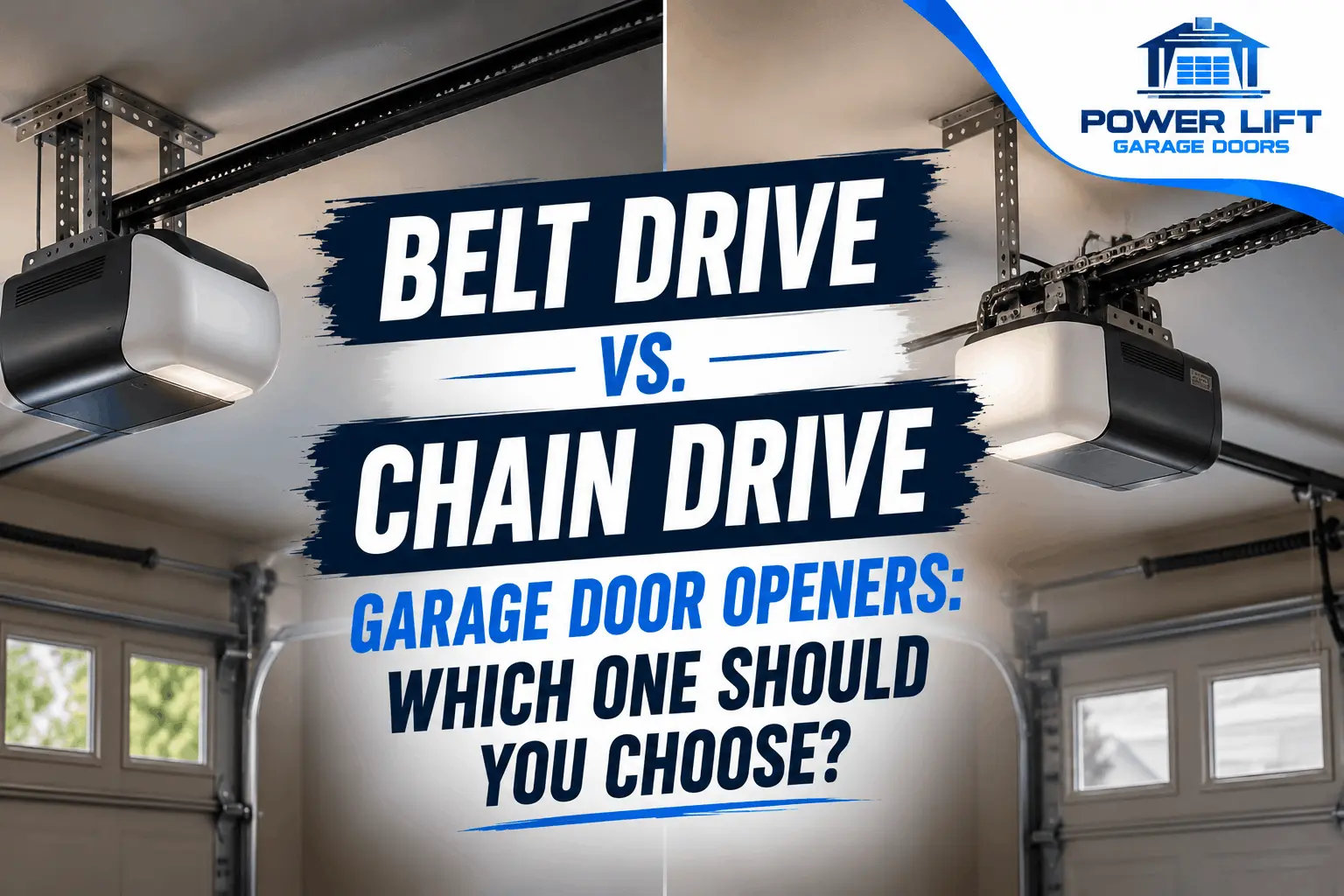
A chain drive opener uses a metal chain, similar in concept to a bicycle chain, to move the trolley. It’s a simple, well-proven mechanism that’s been the standard in garage door openers for decades.
A belt drive opener uses a reinforced rubber belt instead of a metal chain. The belt runs more quietly since there’s no metal-on-metal contact, and it doesn’t need periodic lubrication the way a chain does.
Both systems are compatible with the same range of door weights and sizes for most residential applications. If your opener needs a full repair or replacement rather than just a decision between the two, our garage door opener repair and installation page covers what that process typically involves.
Belt Drive vs. Chain Drive at a Glance
| Factor | Belt Drive | Chain Drive |
|---|---|---|
| Noise level | Quiet, minimal vibration | Louder, metallic operation |
| Upfront cost | Slightly higher | Generally lower |
| Maintenance | Minimal, no lubrication needed | Periodic lubrication required |
| Typical lifespan | Comparable, belt is the main wear item | Comparable, chain wear tied to maintenance |
| Best for | Attached garages, garages near living space | Detached garages, budget-focused replacements |
| Weight capacity | Determined by motor horsepower, not drive type | Determined by motor horsepower, not drive type |
Noise: Which One Is Quieter?
This is usually the deciding factor for most homeowners, and it’s not a close call. Belt drive openers are noticeably quieter than chain drive openers, since a rubber belt doesn’t produce the metallic rattling and clanking that a chain does as it moves over the sprocket.
The noise difference matters most if your garage is attached to living space, especially a bedroom directly above or beside it. A chain drive opener firing at 6 a.m. or late at night is a common source of household complaints in homes with an attached garage. For a detached garage set apart from the house, the noise difference is far less important, since there’s more distance and often another wall or two between the opener and anyone trying to sleep.
Durability and Maintenance
Chain drive systems have a long track record and are generally considered slightly more durable under heavy daily use, largely because metal chains have been refined over decades of use in exactly this application. They do require occasional lubrication to stay quiet and to prevent premature wear, and skipping that maintenance is one of the more common reasons a chain drive opener starts sounding rough well before it actually needs replacing.
Belt drive systems need less routine maintenance since there’s no chain to lubricate, but the belt itself is a wear item that will eventually need replacing, typically after several years of regular use depending on climate and usage frequency. Humidity is worth a specific mention for homes along the Gulf Coast: consistent moisture in the air tends to accelerate corrosion on an unlubricated or poorly maintained chain faster than in drier climates, which is one more reason chain drive owners in this region benefit from staying on top of routine maintenance.
Belt Drive vs Chain Drive Garage Door Opener Cost Comparison
Chain drive openers are generally the more affordable option upfront, which is part of why they remain the default choice on many builder-grade homes. Belt drive openers typically carry a modest price premium, usually reflecting the cost of the reinforced belt material and, in many cases, the quieter overall unit it’s paired with.
The price gap between the two has narrowed over the years and is often smaller than homeowners expect, particularly when comparing similarly featured units (same horsepower, same smart-home connectivity, same safety features) rather than a base chain model against a premium belt model. For a broader look at how opener costs compare to other common garage door repairs and replacements, see our full 2026 garage door repair cost breakdown.
Speed and Reliability
Both systems move doors at comparable speeds for standard residential use, so speed alone isn’t usually a deciding factor between them. Reliability is similarly close: both mechanisms are mature, well-tested technology, and either one from a reputable brand should provide many years of dependable service with basic maintenance.
Where reliability differences do show up is usually tied to maintenance habits rather than the mechanism itself. A chain drive opener that’s never been lubricated will wear faster and get noisier over time than one that’s properly maintained, while a belt drive opener’s main long-term reliability factor is simply the belt’s service life before it needs replacing.
Which Is Better for Heavier or Oversized Doors?
Both belt and chain drive systems are available in horsepower ratings suited to heavier doors, including insulated, wood, or oversized double doors. The drive mechanism itself, belt or chain, isn’t usually the limiting factor for door weight. The motor’s horsepower rating is what matters most here, so a heavier door calls for a stronger motor regardless of which drive type you choose.
That said, some homeowners with heavier doors lean toward chain drive specifically for the perceived extra durability under sustained heavy loads, even though a properly rated belt drive opener handles the same weight without issue. This is more a matter of preference and reputation than a hard technical limitation.
Which Brands Offer Belt Drive and Chain Drive Options?
Most major opener manufacturers make both types, so the belt-versus-chain decision usually isn’t a brand decision too. LiftMaster and Chamberlain both offer well-regarded belt and chain models across several price points, while Genie and Amarr round out the other widely available options. If you’re weighing brand reputation alongside drive type, our garage door opener brands overview breaks down what each manufacturer is generally known for.
Installation and Compatibility Considerations
If you’re replacing an existing opener rather than installing a new one from scratch, switching drive types is usually straightforward, since the rail and trolley systems for belt and chain drive openers are similar in overall design even though the internal mechanism differs. That said, the specific rail and belt or chain assembly is matched to the opener model, so you can’t simply swap a chain onto an existing belt-drive rail or vice versa. A full opener swap, not just a component swap, is typically what’s involved when changing drive types.
Smart home compatibility is available on both belt and chain drive models today, from entry-level units up through premium ones, so drive type isn’t a limiting factor if smartphone control, camera integration, or voice assistant compatibility is on your list. The features and price point of the specific model matter more here than whether it happens to run on a belt or a chain.
Climate Considerations for Pearland and Houston-Area Garages
Local climate is worth factoring into this decision more than most buying guides mention. Along the Gulf Coast, summer heat and humidity are both more extreme and more sustained than in much of the country, and both drive types respond to that differently. A chain’s main climate vulnerability is corrosion from moisture, which routine lubrication largely prevents. A belt’s main vulnerability is heat: rubber belts can degrade somewhat faster under prolonged high heat exposure in an uninsulated garage than they would in a milder climate, though quality belts are engineered to handle normal residential temperature ranges without issue for many years.
Neither of these is a reason to rule out either option for a home in this region. It’s simply a reason to stick with a reputable brand and, for chain drive owners especially, not skip the periodic lubrication that keeps corrosion from setting in.
How to Choose the Right One for Your Home
A few quick questions can settle most of this decision. Is your garage attached to the house, especially near a bedroom? Belt drive is usually worth the modest price difference for the noise reduction alone. Are you replacing an opener on a strict budget and the garage is detached or far from living space? Chain drive remains a solid, cost-effective choice with a long track record. Do you want the lowest possible maintenance over the opener’s lifespan? Belt drive edges out chain drive here, since there’s no periodic lubrication required.
Neither option is objectively wrong. Both are widely used, well-supported by major manufacturers, and capable of years of reliable service. The right choice comes down to how much noise matters in your specific situation and how much of a price premium you’re comfortable paying for it.
Get Help Choosing and Installing the Right Opener
Picking between belt and chain drive is only half the decision. Matching the right horsepower, safety features, and smart-home compatibility to your specific door and garage setup is where a professional consultation actually pays off, especially if you’re also dealing with an aging door or hardware that might need attention at the same time.
PowerLift Garage Doors installs and services both belt drive and chain drive openers across Pearland and the greater Houston area, and can walk you through which option makes sense for your home before you buy anything. Request a free estimate to get started.
Frequently Asked Questions
Belt drive vs chain drive garage door opener: which is better?
Neither is universally better. Belt drive openers are quieter and require less routine maintenance, making them a strong choice for attached garages. Chain drive openers are generally more affordable and have a long track record of durability, making them a solid choice for detached garages or budget-conscious replacements.
How much quieter is a belt drive opener compared to a chain drive?
Belt drive openers are noticeably quieter since the rubber belt doesn’t produce the metal-on-metal contact a chain does. The difference is most noticeable in homes with an attached garage near living space.
Do belt drive openers cost more than chain drive openers?
Belt drive openers typically carry a modest price premium over comparable chain drive models, though the gap has narrowed over the years, especially when comparing units with similar horsepower and features.
How long do chain drive and belt drive openers typically last?
Both systems can last well over a decade with proper maintenance. Chain drives need periodic lubrication to avoid premature wear, while belt drives need less routine maintenance but will eventually need the belt itself replaced.
Can a belt drive opener handle a heavy garage door?
Yes. Belt drive openers are available in horsepower ratings suited to heavy, insulated, or oversized doors. The motor’s horsepower, not the drive mechanism, is what determines whether an opener can handle a given door’s weight.
