


 Repair
A garage door that groans, sags, or slams shut usually points to one problem. Loose springs. Homeowners across Pearland deal with this issue every year, and it is important to know how to tighten garage door springs before the problem turns into a bigger repair. Heat and humidity in the Houston area speed up wear on metal coils, and that wear shows up fast in daily use. This guide walks through the causes, the safety steps, and the exact process a technician follows, so residents know what to expect and when to call for help.


What Causes Garage Door Springs To Lose Tension
Every torsion spring has a lifespan, usually rated around 10,000 open-close cycles. Daily use adds up quickly, and a spring can weaken well before a homeowner notices any visible damage. Humidity plays a large role too. Moisture in the air speeds up rust formation on coils, and rust weakens metal from the inside out.
A door that feels heavier than usual is often the first clue. Uneven lift, loud creaking, or a door that drops fast instead of gliding down are all common warning signs. Local repair data shows spring-related issues account for a large share of garage door service calls in the greater Houston region, and Pearland sees its fair share of that number.
Torsion Springs Vs Extension Springs Explained
Two spring types handle the weight of a residential garage door. Torsion springs sit above the door on a metal shaft, and they twist to store energy. Extension springs run along the side tracks instead, and they stretch and contract as the door moves.
Torsion springs carry more tension, which makes them more dangerous to adjust without the right tools. Extension springs carry less force, but a broken cable near one can still cause injury. Property owners should know which type sits on their door before any adjustment begins. A quick look above the door frame usually answers that question.
Safety Precautions Before You Tighten Garage Door Springs
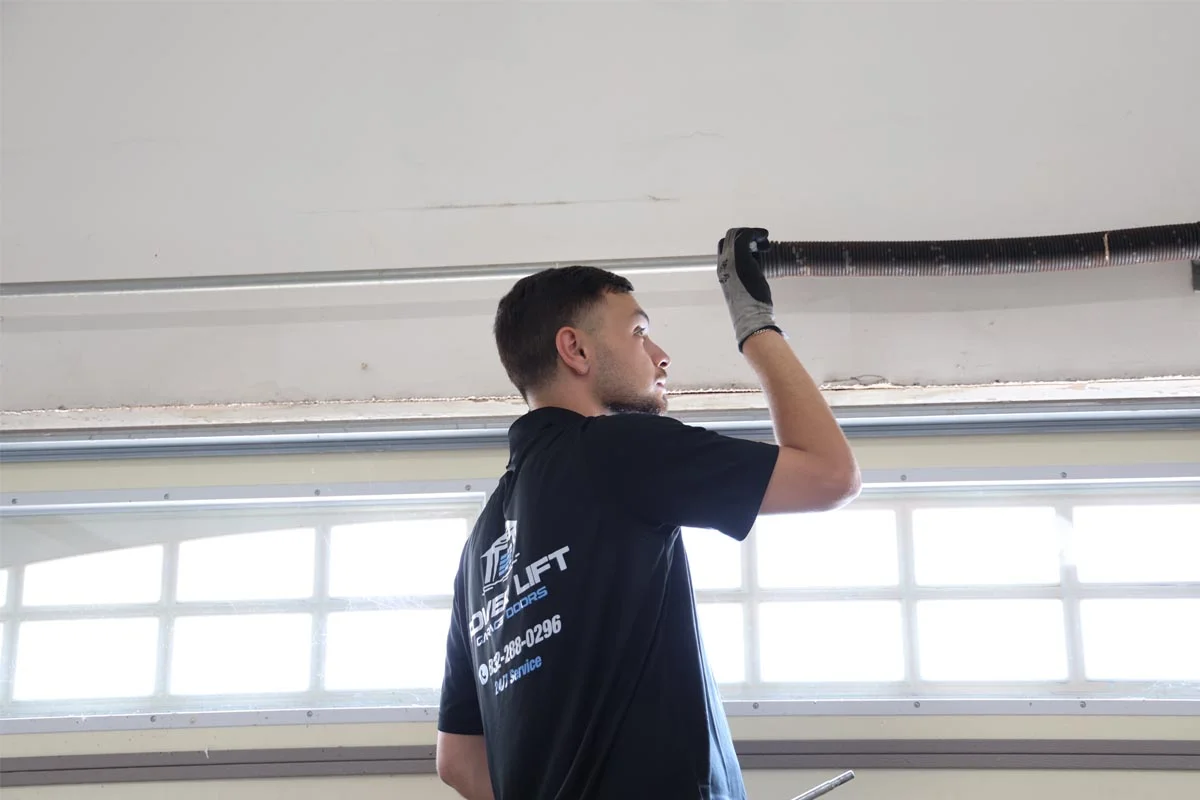
Safety comes first, every single time. A technician always disconnects the automatic opener before touching a spring, and that step prevents the door from moving unexpectedly. Gloves and safety glasses protect hands and eyes from sharp coils and flying debris.
Only a proper winding bar should touch the winding cone. A screwdriver or a makeshift tool can slip under tension and cause serious harm. Injury data from national safety organizations shows garage door springs cause thousands of home repair injuries each year, and most of those accidents involve the wrong tools or a skipped safety step. Anyone who feels unsure at any point should stop immediately and reach out to a licensed technician instead of pushing through the job alone.

Step-by-Step Process To Tighten Garage Door Springs
The process below outlines how a trained technician handles a standard torsion spring adjustment. Homeowners should treat this section as a reference, not a full DIY manual, given the risks outlined above.
Step 1: Close And Secure The Door
The door gets closed fully first. Locking pliers or clamps hold it in place on the track, and that step keeps the door from shifting during the work.
Step 2: Insert The Winding Bar
A winding bar goes into one of the holes on the winding cone. It has to sit fully inside the hole before any pressure gets applied.
Step 3: Loosen The Set Screws
The set screws on the cone get loosened with a wrench, and the winding bar stays firmly in place the entire time. A sudden release at this stage can cause the bar to spin with dangerous force.
Step 4: Wind The Spring In Small Turns
Quarter turns work best for this stage. Each small turn adjusts tension gradually, and that gradual approach lowers the risk of over-tightening. A general rule calls for one full turn per foot of door height, though exact numbers vary by manufacturer.
Step 5: Tighten The Set Screws Again
Once the tension looks right, the set screws get tightened back down. The winding bar stays steady until every screw sits secure.
Step 6: Test The Door Balance
A manual lift test comes next. The door should hold its position at the halfway point. A door that drifts up or down still needs more adjustment before the job counts as finished.

When To Call A Professional Instead Of A DIY Fix
Some situations call for a professional every time. A cracked, rusted, or frayed spring should never get adjusted, since the metal can snap under load. A door that refuses to balance after several attempts often points to a deeper mechanical issue. Property managers handling several rental units face this problem often, and a single missed adjustment can lead to a bigger repair bill later.
Anyone without a second set of hands to help hold tension should also step back from the job. Our spring repair services exist for exactly this reason, and a same-day visit often costs far less than an emergency room trip.
Why Pearland Homeowners Choose Powerlift Garage Doors
Powerlift Garage Doors has completed more than 400 service calls across Pearland and the surrounding Houston-area communities, with over 350 satisfied customers along the way. Every technician carries full insurance, and every job comes backed by a 100% quality guarantee. Same-day appointments and 24/7 emergency support set the company apart from smaller local shops that only work standard business hours.
Residents who need more than a spring adjustment can also count on our garage door installation services for full system replacements. A quick call gets a licensed technician on site fast, often the same day the request comes in.

Frequently Asked Questions
How much does it cost to tighten garage door springs in Pearland, TX?
Pricing depends on spring type and door size, and a technician can confirm exact costs after a quick inspection. Most adjustment visits stay affordable compared to a full spring replacement.
How often should garage door springs get adjusted?
An annual check works well for most homes, though heavy daily use may call for more frequent visits. A technician can spot early wear before it turns into a bigger issue.
Can homeowners tighten garage door springs themselves?
Some homeowners attempt the job with the right tools and safety gear, though the risk stays high without training. A professional visit removes that risk entirely.
How does a homeowner know if a spring is too loose or too tight?
A door that will not stay open halfway usually points to a loose spring. A door that shoots upward fast often points to a spring wound too tight.
Is a DIY torsion spring adjustment safe?
Torsion springs carry high tension, and a small mistake can cause serious injury. Most safety experts recommend a licensed technician for this specific task.
Schedule Garage Door Spring Service In Pearland Today
A loose or unbalanced door rarely fixes itself, and small problems tend to grow fast once ignored. Powerlift Garage Doors offers same-day appointments across Pearland, backed by full insurance and a 100% satisfaction guarantee. A quick call today can restore smooth, reliable operation before a minor issue turns into a costly repair.
